


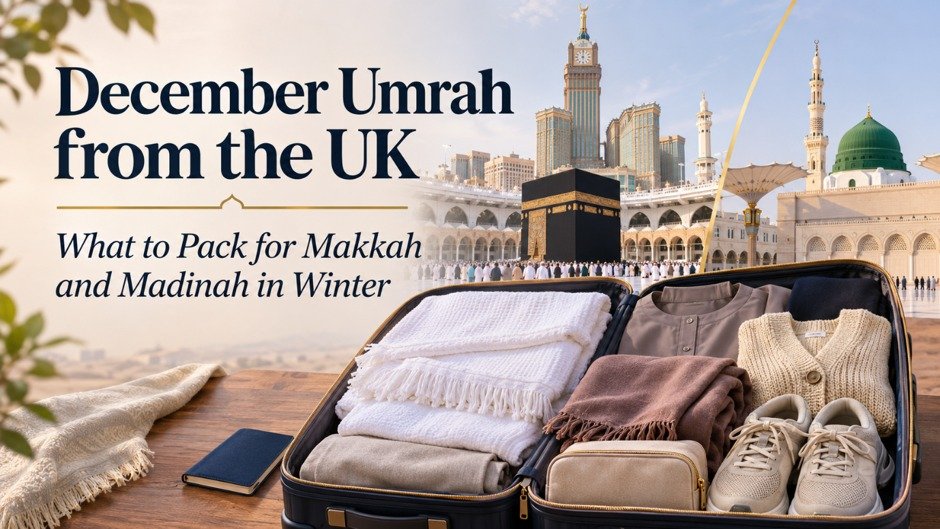
December is one of the most popular months for British Muslims to perform Umrah. The Christmas break gives families time off work and school, and many choose December Umrah packages UK operators offer for seven to fourteen nights.
But packing for December catches many pilgrims out. You leave a cold, wet UK, land in a warm Makkah, and then find Madinah surprisingly chilly at night. This guide explains what to pack, and what to leave at home.
Pack light, breathable clothes for warm days in Makkah, plus a warm layer for cool evenings in Madinah. Bring ihram and unscented toiletries, comfortable sandals you have already worn, your medicines with a GP letter, and a power bank. Leave space in your luggage for Zamzam water and gifts.
What the weather is like in December
The two holy cities feel quite different in winter.
| City | Typical daytime high | Typical night-time low | What it feels like |
| Makkah | around 29 to 31°C | around 20°C | Warm and sunny, like a British summer heatwave |
| Madinah | around 24 to 27°C | around 11 to 14°C | Pleasant by day, cool at night |
Rain is rare but possible, and nights in Madinah can occasionally drop close to 10°C. Air-conditioned mosques and hotels can also feel cold after a long walk in the sun.
Ihram and prayer essentials
These are the items you cannot do without.
- Ihram for men: two plain, unstitched white sheets. Pack two sets, so you have a spare if one gets dirty.
- Modest clothing for women: loose, comfortable clothes that cover the body, in breathable fabrics. There is no special ihram garment for women.
- An ihram belt or money belt: useful for keeping your phone, cards and passport safe.
- Unscented toiletries: perfume and scented products are not allowed while in ihram, so pack unscented soap, shampoo and deodorant.
- A small prayer mat: handy when the mosque is full and you pray in the outer courtyards.
- A pocket Quran or Quran app and a list of your personal duas.
Clothes for warm days and cool nights
Think in layers. A typical day might start cool, become warm by midday, and turn chilly again after Maghrib, especially in Madinah.
- Light cotton or linen clothing for the daytime in Makkah
- A light jumper, cardigan or fleece for evenings and air-conditioned mosques
- A shawl or light jacket for women, which also helps with modesty
- Socks for cooler nights, but remember men should not wear covering footwear while in ihram
- A compact umbrella for sun and the occasional shower
You can do laundry at many hotels, so a week’s worth of clothes is usually enough for a two-week trip.
Footwear
You will walk a lot. Tawaf and sa’i alone can add up to several kilometres, plus several trips to the mosque every day.
Pack comfortable sandals that you have already worn for a few weeks at home. Men in ihram should wear sandals that leave the top of the foot uncovered. A small drawstring bag is useful for carrying your shoes inside the mosque, so you do not lose them at the door.
Health and medicines
- Prescription medicines: bring enough for the whole trip, in original packaging, with a letter from your GP. Some medicines are controlled in Saudi Arabia, so check before you travel.
- A small first-aid kit: plasters, blister pads, painkillers, rehydration sachets and throat lozenges. Coughs and colds spread quickly in crowds.
- Sun cream and lip balm: the December sun in Makkah is still strong.
- Vaccinations: check that you have had the meningitis ACWY vaccine. The NHS-backed TravelHealthPro website has the latest advice for Umrah pilgrims.
Documents and money
- Passport: valid for at least six months from your travel date
- Saudi visa: saved on your phone and printed
- Nusuk app: installed with your Umrah permit and any Rawdah booking ready
- Travel insurance documents
- Hotel and transfer details
- A bank card that works abroad, plus some Saudi riyals for small purchases
The UK Foreign Office publishes up-to-date travel advice for Saudi Arabia, including entry rules.
Tech essentials
- A power bank: your phone holds your visa, permit and maps
- A plug adaptor: Saudi Arabia mainly uses the same three-pin plug as the UK, but some buildings have other sockets, so a small universal adaptor is useful
- Mobile data: a roaming plan, a local SIM or a travel eSIM
- Offline maps of central Makkah and Madinah, downloaded before you fly
Luggage and what to leave at home
Check your airline’s baggage allowance before you pack. Many Umrah packages UK travellers book include checked luggage, but allowances and Zamzam water rules differ between airlines.
Leave space for the journey home. Most pilgrims bring back Zamzam water, dates, prayer mats and gifts. Things to leave at home include:
- valuable jewellery
- too many outfits
- scented products if you will be in ihram
- large toiletries that break UK hand-luggage liquid rules
Final thoughts
Packing well for a December Umrah is about balance: light clothes for warm days in Makkah, a warm layer for cool nights in Madinah, and the essentials for ihram and worship. Pack light, wear in your sandals before you go, and keep your documents safe on your phone and on paper.
Frequently asked questions
What is the weather like in Makkah in December?
Makkah is warm in December, with daytime highs of around 29 to 31°C and nights of around 20°C. Rain is rare but possible.
Is Madinah cold in December?
Madinah is pleasant by day, at around 24 to 27°C, but nights are cool, usually around 11 to 14°C. Pack a light jumper or fleece for the evenings.
What should men pack for ihram?
Two plain, unstitched white sheets, ideally two sets, plus an ihram belt, sandals that leave the top of the foot uncovered and unscented toiletries.
Can I bring medicines for Umrah from the UK?
Yes. Bring enough for the whole trip in their original packaging, with a letter from your GP. Some medicines are controlled in Saudi Arabia, so check before you travel.
Can I bring Zamzam water back to the UK?
Most pilgrims do, but rules differ between airlines. Check your airline’s Zamzam water and baggage policy before you fly home.
About the author: This article was written by the team at Islamic Travel Agency, a London-based, ATOL-protected Umrah and Hajj specialist helping UK pilgrims plan December Umrah trips.