


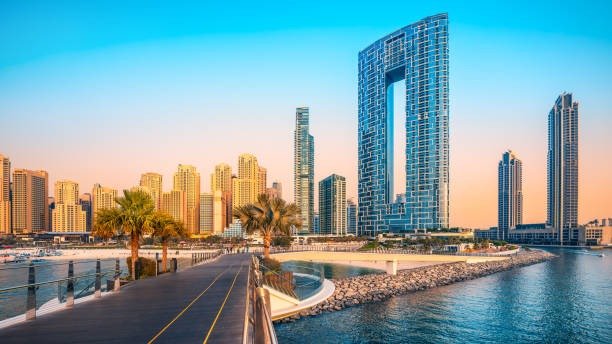
The property market in Dubai has reached a remarkable new peak in 2025, with sales volumes and values climbing higher than analysts predicted. Data from leading real-estate trackers show transactions for the first 10 months of the year already exceeding AED 559 billion (around £120 billion), surpassing the full-year total for 2024. In the first half alone, residential sales reached AED 151.8 billion, representing a 46% increase year on year, while unit volumes rose 25% to over 50,000.
These are extraordinary figures by any global benchmark. For a UK investor watching from abroad, the numbers highlight how far Dubai has come since its post-2008 recovery; the emirate’s real-estate market has evolved into a key global asset class, characterised by strong institutional participation and a growing base of long-term residents.
You can sense the momentum on the ground; cranes dominate the skyline once more, but this time the pace feels more deliberate and strategically anchored than speculative.
Why international investors are flooding in
Across 2025, investors from London to Singapore have looked beyond traditional markets in search of performance and stability. Recent figures show British buyers have overtaken Indian nationals as the most active foreign group in Dubai’s property scene, with transactions from the UK rising more than 50% in the past year.
When you cast your eye toward the acquisition of property in Dubai, the reasons quickly surface. Prices remain comparatively attractive when converted to sterling, rental yields often sit in the 6-8% range, with the emirate’s tax structure remaining favourable for those seeking net income without the drag of heavy fiscal overheads. Add to this a sophisticated infrastructure, an investor-friendly legal context and a sphere where the appeal of residency options tied to ownership, then the case becomes stronger still.
For you, this means the opportunity to participate in a market fuelled by both domestic demand and the arrival of high-net-worth individuals seeking lifestyle and stability.
Tofay, over half of all prime deals in 2025 have been cash purchases, a clear sign of confidence from investors who see Dubai as a safe, yield-rich haven amid global uncertainty.
Sectoral shifts and emerging risks
If you examine the details of 2025’s swell, you’ll find the growth pattern far from uniform, where apartments dominate the transaction charts, while villa sales, although still valuable, have shown early signs of cooling. October data, for instance, recorded apartment sales worth more than AED 31 billion across over 16,000 transactions, yet villa sales fell nearly 40% in volume compared with last year.
Meanwhile, supply is building at a remarkable pace: more than 20,000 units were delivered in the first half of the year, with more than 70,000 expected by December and a projected pipeline of 200,000 units stretching into 2027. For investors like you, this is a double-edged sword. Increased supply can temper runaway price growth and make entry easier, but it also introduces the risk of oversupply in certain districts.
Meanwhile, credit agencies have already warned of potential price corrections of up to 15% if momentum softens. So, while Dubai’s fundamentals remain solid (diversified demand, strong tourism inflows and sustained urban expansion), the market could move into a stabilization phase rather than the explosive growth seen earlier in the decade.
Therefore, this is the moment to think critically about which segment you enter and how long you plan to hold your asset.
What this means for your portfolio
For UK investors seeking global diversification, Dubai presents an appealing complement to domestic property exposure. London’s prime market continues to struggle with compressed yields and rising costs, whereas Dubai offers genuine income-driven opportunities. With average gross yields between 6-8%, you’re often looking at returns double those found in parts of the South East.
Beyond the numbers, Dubai’s market gives access to an entirely different economic rhythm, one powered by tourism, trade, finance and migration, rather than the cyclical constraints of Western economies. When you invest there, you’re effectively hedging against local stagnation. Still, you’ll want to weigh several factors carefully: local regulations, the residency visa implications, exchange-rate movement (the dirham’s link to the US dollar can influence returns) and your own UK tax position on overseas assets.
A thoughtful investor will also appreciate that record growth can breed complacency. As new developments flood the pipeline, rental growth may flatten and resale competition could intensify.
The most discerning approach is often a medium-term strategy (5-8 years) focused on capital preservation, sustainable yield and properties backed by reputable developers. Ergo, you’re playing a game of patience, something beyond speculation.
Strategic considerations moving forward
While the 2025 boom is impressive, you’ll want to look ahead rather than just admire the numbers. Forecasts point to a more competitive climate as new stock hits the market through 2026 and 2027. The smart money is targeting quality over quantity, where locations such as Business Bay, Dubai Hills Estate and Jumeirah Village Circle have been leading both transaction volume and value growth.
If you are selecting assets, pay close attention to the developer’s reputation, payment structure, exit liquidity and tenant demand, so think of this as groundwork for future resilience. Another trend worth noting is Dubai’s innovation in property technology and regulation, where the introduction of tokenized real-estate assets and flexible investor visas hints at an unwinding ecosystem that appeals to digitally savvy and mobile investors.
This dynamic policy environment could enhance liquidity and accessibility, making the market even more attractive for those comfortable navigating cross-border investments. Still, caution is key: high visibility brings competition. As more global buyers enter, the opportunity cost rises and yields could compress.
Yet, with disciplined selection and realistic expectations, you position yourself to benefit from Dubai’s ongoing transformation into a truly global financial and lifestyle centre.
Key takeaways
Dubai’s record-breaking property sales in 2025 mark more than an economic headline; they reflect a city in full stride, balancing ambition with pragmatism. For you, as an investor based in the UK, this moment offers a tangible opportunity to expand your global footprint and capture growth in one of the world’s most dynamic markets.
The path forward calls for careful planning, professional guidance and a clear sense of your time horizon. Dubai rewards investors who think strategically and engage with the market’s oscillating character rather than chasing short-term spikes.
Therefore, with the right mix of diligence, patience and vision, your entry into Dubai’s property market in 2025 could represent a meaningful step in building a portfolio that truly spans continents.