


The Expanding Demands of Telecom and Remote Connectivity.
Telecommunication networks are expanding faster than ever. From 4G densification to 5G rollout and rural connectivity programs, base stations are being deployed in cities, highways, mountains, and remote industrial zones. Each installation carries a simple requirement: uninterrupted power.
Even a brief outage can disrupt communication services, impact emergency systems, and create significant operational losses. As telecom networks grow more distributed, reliable power storage becomes a central component of infrastructure planning.
This is where the base station energy cabinet plays a critical role. It acts as the backbone of backup power systems, ensuring stability, efficiency, and performance continuity across demanding environments.
The Role of a Base Station Energy Cabinet in Network Stability.
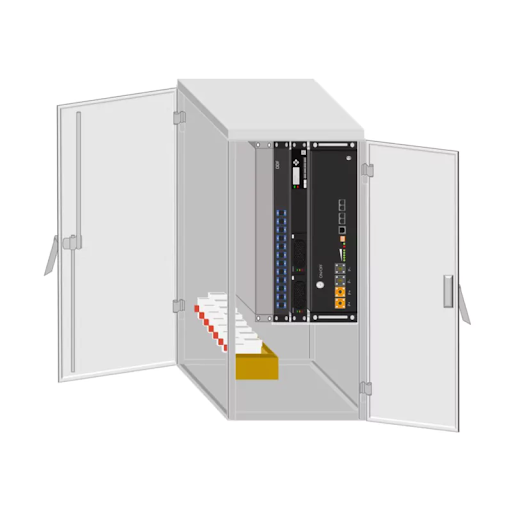
A base station energy cabinet is not merely a storage container for batteries. It is a structured, integrated system engineered to house power modules, monitoring units, cooling components, and protection mechanisms within a secure enclosure.
In telecom environments, the cabinet must perform multiple tasks simultaneously:
- Store backup power efficiently
- Protect battery modules from environmental stress
- Support load balancing during grid instability
- Enable rapid power switching during outages
- Maintain safe operating temperatures
As network traffic increases and energy consumption rises, the importance of structured energy storage becomes even more evident. Modern cabinets are designed to support lithium battery systems, hybrid power setups, and renewable integrations such as solar powered base stations.
Compact Solutions for Urban Deployment: Wall Mounted Base Station Battery Cabinet.
Urban telecom infrastructure presents a different challenge compared to rural installations. Space constraints, building integration requirements, and aesthetic considerations all influence equipment selection.
The Wall Mounted Base Station Battery Cabinet addresses these challenges with a compact yet efficient design. Mounted securely on walls inside telecom rooms or sheltered enclosures, this system offers:
- Space saving installation
- Organized cable routing
- Easy maintenance access
- Reduced floor space usage
- Clean integration within indoor or semi outdoor sites
For small base stations or micro cell deployments in urban areas, wall mounted cabinets provide the ideal balance between performance and practicality.
Despite their compact size, these cabinets maintain strong load capacity and structural integrity, ensuring reliable power support for communication equipment.
Structural and Engineering Considerations.
Telecom infrastructure operates continuously, often 24/7, in varying environmental conditions. The engineering of battery cabinets must therefore prioritize durability and long-term stability.
Key structural features commonly include:
Reinforced Steel Construction
High grade steel panels improve mechanical strength and vibration resistance.
Ventilation and Heat Management
Effective airflow design prevents overheating and enhances battery lifespan.
IP Rated Protection
Dust and moisture protection is essential, particularly in semi-outdoor or rooftop installations.
Secure Locking Systems
Telecom equipment requires protection from unauthorized access or tampering.
Modular Battery Configuration
Expandable design allows operators to increase capacity as network demand grows.
Both floor based and Wall Mounted Base Station Battery Cabinet systems are engineered with scalability in mind, ensuring they remain adaptable to evolving network needs.
Financial and Operational Impact.
Power interruptions can result in more than temporary inconvenience. In telecom systems, downtime affects revenue, customer trust, and service level agreements.
Deploying a properly engineered base station energy cabinet offers measurable benefits:
- Reduced emergency maintenance visits
- Lower battery replacement frequency
- Improved operational uptime
- Stabilized energy performance
- Reduced dependence on diesel generators
In regions where grid reliability fluctuates, energy cabinets provide immediate switchover to stored power. This seamless transition prevents service disruption and maintains communication continuity.
Over time, the cost savings generated through reduced downtime and extended battery life justify the investment.
Supporting Renewable and Hybrid Energy Systems.
Telecom operators are increasingly adopting renewable energy to reduce fuel costs and carbon emissions. Solar powered base stations are becoming more common, especially in off grid or rural locations.
Energy cabinets integrate smoothly with hybrid systems by:
- Storing excess solar energy
- Supporting load during nighttime operation
- Balancing generator and battery usage
- Reducing fuel consumption
When paired with lithium battery technology, modern cabinets improve charge efficiency and cycle performance. This enhances sustainability while maintaining operational reliability.
Deployment Scenarios Across Network Environments.
Different network environments demand tailored solutions.
Urban Telecom Rooms
Compact Wall Mounted Base Station Battery Cabinet units maximize space efficiency in indoor technical rooms.
Rooftop Installations
Lightweight yet durable cabinets withstand exposure while maintaining structural safety.
Rural Base Stations
Larger base station energy cabinet systems provide extended backup capacity where grid access is limited.
Emergency Communication Networks
Reliable battery storage ensures uninterrupted performance for disaster response systems.
Across each deployment scenario, the goal remains consistent: maintain network uptime and protect critical communication infrastructure.
Scalability for Future Network Growth.
Telecommunication demand is projected to increase significantly over the coming years. IoT expansion, smart cities, remote work systems, and cloud services all contribute to rising data consumption.
Energy storage infrastructure must be ready to scale alongside network upgrades.
Modern cabinet systems allow:
- Additional battery module integration
- Simplified system expansion
- Compatibility with new battery chemistries
- Integration with remote monitoring platforms
This adaptability protects telecom investments and ensures long term infrastructure relevance.
Advancing Toward Smarter Energy Cabinets.
Technological innovation continues to enhance battery cabinet systems. The next generation of telecom energy storage is expected to incorporate:
- Remote performance monitoring
- Real time temperature diagnostics
- Intelligent charge discharge optimization
- Advanced fire protection systems
- Improved lightweight materials
These innovations will further strengthen the reliability and safety of both the base station energy cabinet and compact wall mounted alternatives.
As telecom networks evolve into more intelligent ecosystems, energy infrastructure must evolve in parallel.
Conclusion.
Reliable power infrastructure forms the foundation of modern telecommunication networks. Without stable energy storage, even the most advanced base stations cannot maintain consistent service delivery.
A properly engineered base station energy cabinet ensures scalable, durable, and efficient power backup for telecom operations. Meanwhile, the Wall Mounted Base Station Battery Cabinet provides a space efficient solution tailored for urban and compact installations.
Together, these cabinet systems support uninterrupted connectivity, operational efficiency, and long term infrastructure stability key factors in the continued growth of global communication networks.