


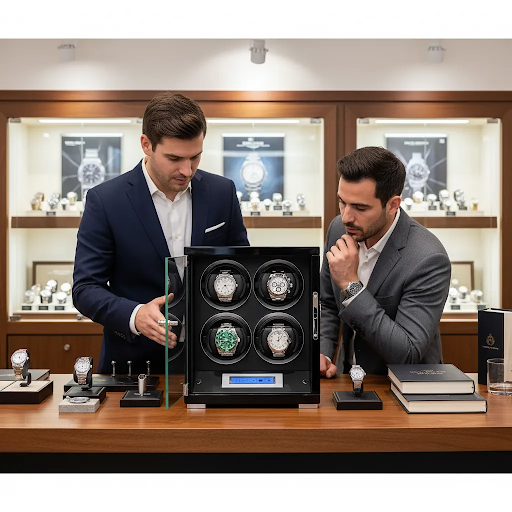
Collecting fine automatic watches is more than a passion—it’s a celebration of precision engineering, heritage craftsmanship, and timeless style. Every automatic timepiece is an intricate machine powered by movement, and like any mechanical system, it needs careful maintenance. This is where automatic watch winders play an essential role. They ensure your watches stay wound, protected, and ready to wear at any moment.
In the world of luxury watch accessories, renowned brands such as Aevitas and Tempus Luxury have set new standards for design, craftsmanship, and technology. Whether you are a seasoned horology enthusiast or a new collector investing in your first premium timepiece, understanding how watch winders work—and how to select the right one—can help you preserve the beauty and performance of your entire collection.
This guide explores everything you need to know, from how watch winders function to what features truly matter when choosing the best automatic watch winders for your needs.
What Are Automatic Watch Winders?
Automatic watches rely on motion to stay powered. As long as the wearer is active, the internal rotor spins and winds the mainspring, keeping the watch running. But when the watch is not worn for several days, it begins to lose power and eventually stops.
Automatic watch winders are specialized devices designed to keep these timepieces running by mimicking natural wrist movements. They rotate the watch gently at set intervals, ensuring consistent power and preventing the internal lubricants from settling.
Why Collectors Use Them
Owning multiple automatic watches often means you don’t wear each piece every day. If a watch stops:
- You must reset the time
- Re-adjust complications (date, moon phase, GMT, etc.)
- Risk wear-and-tear from frequent crown adjustments
With a high-quality winder, these issues are eliminated. Your watch remains accurate, lubricated, and ready to strap on any time.
How Automatic Watch Winders Work
Most winders operate using a small motor that rotates the watch in controlled cycles. These cycles are measured in TPD (Turns Per Day), a crucial specification for compatibility with different watch movements.
Key Functions of a Watch Winder
- Rotation Direction
- Clockwise
- Counterclockwise
- Bi-directional
- Turns Per Day Settings
Every movement has an ideal TPD range, typically between 650–1,200. Premium brands like Aevitas and Tempus Luxury offer precise customization. - Rest Intervals
Essential to mimic natural wrist activity. Continuous spinning could overwind the watch or stress the movement. - Watch Cushion System
Ensures proper grip without stretching the strap or bracelet. - Power Options
- AC adapter
- Battery operation (useful for safes)
The Value of High-Quality Watch Winders
Not all winders are created equal. A poorly built model can harm your watch by using cheap motors, spinning excessively, or applying incorrect torque.
Luxury brands take craftsmanship seriously. Brands such as Aevitas and Tempus Luxury focus on:
- Whisper-quiet motors
- Precision TPD control
- Luxury-grade materials
- Long-term reliability
- Soft interior lining to protect watch cases
This makes them suitable for high-value collections, including Rolex, Omega, Breitling, Patek Philippe, AP, and more.
Benefits of Using Automatic Watch Winders
1. Maintains Accuracy
When a watch stops, you must reset the time, date, and other complications. A winder eliminates this inconvenience.
2. Protects the Internal Mechanism
Movement parts need consistent lubrication. Long inactivity can cause oils to settle or dry out.
3. Offers Safe Storage
Most winders double as presentation boxes, offering:
- Watch protection
- Dust control
- Anti-magnetic casing
4. Extends Watch Lifespan
Reduced wear on the crown and setting mechanism enhances the longevity of your timepiece.
5. Enhances Luxury Display
Collectors appreciate both function and presentation. Winders from luxury brands provide visual appeal alongside practicality.
Comparing Aevitas vs Tempus Luxury Watch Winders
Below is a comparison table to help illustrate how premium brands differentiate themselves in the watch winder market:
Table: Feature Comparison
| Feature | Aevitas | Tempus Luxury |
| Motor Quality | Ultra-quiet Japanese Mabuchi | Swiss-inspired precision motor |
| Materials | Solid wood, carbon fiber, glass | High-gloss finishes, premium veneers |
| TPD Customization | Yes (wide range) | Yes (fine-tuned control) |
| Rotation Modes | Multi-direction | Multi-direction |
| Security | Lockable door options | Reinforced casing for safes |
| Aesthetic Style | Modern & minimalist | Sophisticated & classic |
| Price Range | Mid-high luxury | High-end luxury |
Both brands excel in craftsmanship, making them strong choices for collectors. They simply offer different design personalities—Aevitas with a modern touch and Tempus Luxury with a more classic luxurious feel.
How to Choose the Best Automatic Watch Winder
Buying a winder is an investment. Here are the most important factors to consider:
1. Motor Reliability
A smooth, quiet, and durable motor is essential. Avoid low-cost winders that may strain your watch’s movement.
2. TPD & Direction Settings
A versatile winder should offer multiple rotation modes and programmable TPD.
3. Build Quality
Look for:
- Hardwoods or carbon fiber
- Scratch-resistant glass
- Soft interior lining
4. Power Source
Collectors storing watches in safes often prefer battery-powered units.
5. Noise Level
Premium winders operate silently, ideal for bedrooms or offices.
6. Aesthetic Design
The winder should complement your interior décor and showcase your watch elegantly.
7. Brand Reputation
Brands known for precision engineering, like Aevitas and Tempus Luxury, offer peace of mind and long-term value.
Common Myths About Watch Winders
Myth 1: They Overwind Watches
Not true. Modern automatic movements feature slip-clutch mechanisms to prevent overwinding.
Myth 2: Only Expensive Watches Need Winders
Even mid-range automatic watches benefit from proper storage and consistent lubrication.
Myth 3: Winders Are Just for Display
While they look luxurious, their primary purpose is functionality and preservation.
Who Should Use Automatic Watch Winders?
Watch Collectors
Owners of 3 or more automatic watches benefit greatly from keeping all pieces ready to wear.
Professionals
Those who rotate watches daily or frequently travel.
Luxury Enthusiasts
Individuals who value presentation, aesthetics, and premium storage solutions.
Owners of Complicated Watches
Models with moon phases, perpetual calendars, or dual time zones are easier to manage when kept running.
The Role of Watch Winders in Modern Luxury Living
Luxury today is about more than owning expensive items—it’s about the experience. A well-designed winder aligns with this mindset by offering:
- Convenience
- Precision
- Protection
- Presentation
Brands like Aevitas and Tempus Luxury combine technology with craftsmanship to elevate the modern watch-collecting lifestyle.
Using automatic watch winders is not only practical but also a way to honor the art of mechanical timekeeping.
Conclusion
Automatic watches deserve care, precision, and secure storage. A high-quality winder ensures your timepieces remain accurate, lubricated, and ready to wear at any moment. Whether you own a growing collection or a few cherished pieces, investing in the automatic watch winders enhances both functionality and luxury.
Brands like Aevitas and Tempus Luxury continue to redefine excellence with their commitment to craftsmanship and innovation. By choosing the right winder, you not only protect your watches but also enrich your entire ownership experience.
With the right knowledge and the right equipment, your collection can continue ticking beautifully for generations to come.
FAQs About Automatic Watch Winders
1. Do all automatic watches require a winder?
Not necessarily, but they benefit from one, especially models with advanced complications.
2. Can a watch winder damage my watch?
Only low-quality winders pose a risk. Premium models with adjustable settings are completely safe.
3. How many TPD do most watches need?
Most watches operate best between 650 and 900 TPD, but certain models may have different requirements.
4. Can I store quartz watches in a winder?
Quartz watches don’t need a winder but can still be stored in them for display.
5. Are dual or multi-watch winders worth it?
Yes, especially for collectors with several timepieces. Multi-unit winders are cost-effective and space-efficient.
6. Where should I place my watch winder?
Ideal locations include bedrooms, offices, or secure safes—anywhere with stable temperatures and low humidity.