


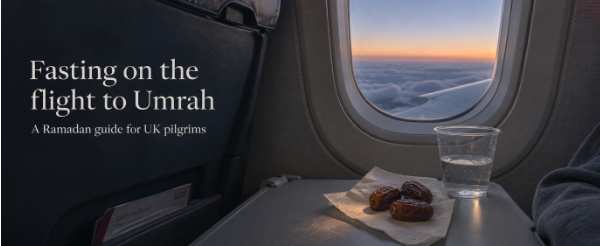
For many British Muslims, the best part of a Ramadan Umrah is breaking the fast in Makkah or Madinah. But first there is the flight. A six-hour trip across three time zones raises some very practical questions. When do you eat suhoor? Can you break your fast on the plane? Is it better to fast at all while travelling?
This guide answers those questions in simple terms, and shows how the timing of your flight can also help keep the cost of your trip down.
Islam allows travellers to break the fast and make it up later, so you can choose whether to fast on your travel day. If you do fast, eat a good suhoor before you leave, drink plenty of water the night before and break your fast at sunset where the plane is, as many scholars advise. Saudi Arabia is three hours ahead of the UK in February, so a direct flight of about six to seven hours can shorten or lengthen your fasting day. Choosing quieter dates in the first half of Ramadan 2027 usually gives you cheaper flights and hotels.
Do you have to fast on your travel day?
The Quran allows people who are travelling to postpone their fasts and make them up on other days. Scholars broadly agree on this, though they differ on some details, such as the distance that counts as travel and whether fasting or not fasting is better on the day.
In practice, some pilgrims fast on the flight because they want every day of Ramadan, while others break the fast to save their energy for Umrah on arrival. Both are common choices. If you are unsure, ask a scholar you trust before you travel.
How the time difference affects your fast
In February, the UK is on Greenwich Mean Time and Saudi Arabia is three hours ahead. Flying east, you lose those three hours, so sunset arrives earlier by your body clock. Flying home, the opposite happens, and your fasting day can feel much longer.
Many scholars advise that a fasting traveller breaks the fast when the sun sets where they are, not according to the time at home or at the destination. On a plane, this means watching for sunset outside the window, or asking the crew. Some airlines announce iftar times on flights to and from Saudi Arabia during Ramadan, but do not rely on this.
How flight timing changes your day
| Flight timing | How it affects your fast | Good for |
|---|---|---|
| Overnight flight, landing in the morning | Suhoor before or during the flight, then a full fasting day on arrival | Saving a hotel night, if you can sleep on the plane |
| Morning departure, landing in the evening | Most of the fast is spent travelling, iftar soon after landing | Pilgrims who prefer to arrive and rest |
| Afternoon departure, landing at night | Iftar usually on the plane, arrive after Isha | Avoiding a long fasting day in transit |
| Connecting flight with a long stop | Fast may stretch across time zones, with iftar at a stopover | Lower fares, but more tiring |
A direct flight from London to Jeddah takes around six to seven hours. Connecting flights take longer, and a long stopover while fasting can be very tiring, especially for older relatives and children.
Preparing your body before the flight
- Drink well the night before. Spread water through the evening rather than drinking a lot at suhoor.
- Choose a slow suhoor. Oats, eggs, wholemeal bread and dates release energy slowly. Avoid very salty food, which makes you thirsty.
- Go easy on caffeine. Too much tea or coffee at suhoor can leave you dehydrated on the plane.
- Pack an iftar bag. Take dates, a refillable bottle and a light snack in your hand luggage, in case the timing on board does not suit you.
- Rest when you can. Sleep on the flight if possible, as you may want to perform Umrah soon after you land.
If you take regular medicine or have a health condition such as diabetes, speak to your GP before deciding to fast while travelling. The NHS- backed TravelHealthPro website also has advice for travellers.
Ihram and the miqat on a Ramadan flight
If you fly into Jeddah and plan to go straight to Umrah, you need to be in ihram before the plane crosses the miqat. Many pilgrims change into ihram at the UK airport, or wear it under their clothes, and make the intention on board. If you fly into Madinah first, you enter ihram later at Dhul Hulayfah when you leave the city for Makkah.
Changing in a small plane toilet while fasting is not easy, so prepare at home or at the airport.
Using flight timing to keep costs down
Ramadan is the busiest Umrah season, but some choices make it more affordable:
- Travel in the first ten days. Ramadan 2027 is expected to begin around 8 February. The first ten days are usually cheaper and calmer than the last ten nights.
- Be flexible with flight times. Overnight and connecting flights are often cheaper, but weigh the saving against how tired you will be.
- Compare airports. Prices from London, Manchester and Birmingham can differ, and flying into Madinah can sometimes cost less than Jeddah.
- Book early. Flights and hotels near the Haram rise in price as Ramadan gets closer.
Comparing cheap Umrah packages that include flights, the visa, hotels and transfers lets you see the full cost in one quote. For the holy month itself, cheap Ramadan Umrah packages sell out first, so it pays to book months ahead. Packages with flights sold by UK companies should be protected under the ATOL scheme.
On the flight home
The return flight is often the harder one. Flying west, the sun sets later, so your fast can stretch for many more hours than usual. Many pilgrims choose not to fast on the way home and make the day up later. If you do fast, keep drinking well at suhoor and rest as much as you can.
The short version
You can choose whether to fast while flying to Ramadan Umrah, as Islam allows travellers to make up fasts later. If you fast, prepare with water and a good suhoor, break your fast at sunset where you are, and pick a flight time that suits your energy. Travelling in the first half of Ramadan and booking early are the simplest ways to keep the cost down.
On matters of fasting and travel, scholars hold different views on some details, so follow the guidance of a scholar you trust.
Frequently asked questions
Yes. Travellers are allowed to break the fast and make it up later. If you are fasting, many scholars advise breaking the fast at sunset where the plane is.
In February and early March, Saudi Arabia is three hours ahead of the UK.
Many pilgrims rest first, especially after a night flight. There is no need to rush, as long as you stay in ihram until you complete your Umrah.
The first ten days of Ramadan are usually the cheapest. Prices are highest in the last ten nights.
Many do, but not all. Check whether flights, the visa, hotels and transfers are included before you compare prices.
About the author: This article was written by the team at Islamic Travel, a London-based, ATOL-protected Umrah and Hajj specialist helping UK pilgrims since 2017.