


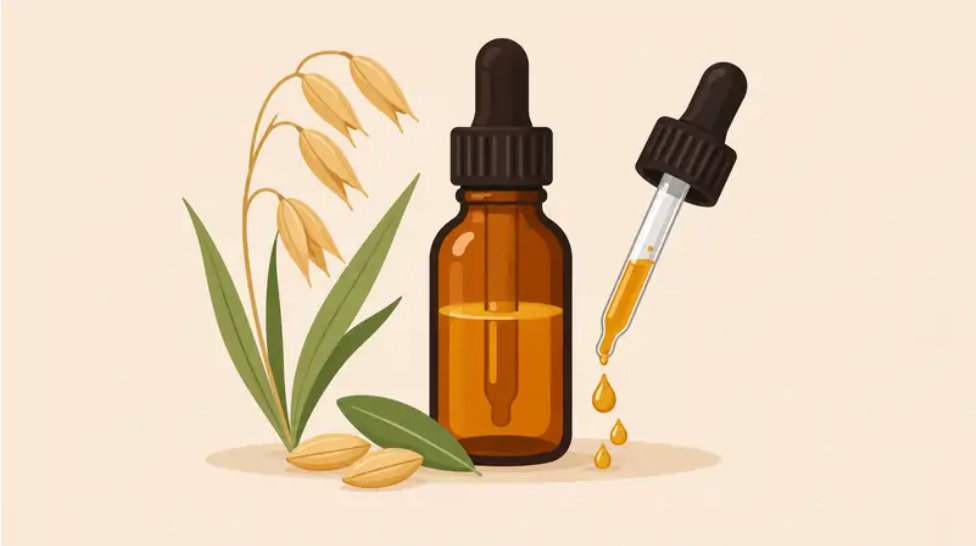
Oatstraw tincture drops vs dropper is a common point of confusion after someone reads a serving direction like “1 dropper,” “30 drops,” or “1 dropperful.” These phrases look simple, but they do not always mean the glass pipette must fill all the way to the top. In many tincture bottles, one squeeze of the rubber bulb may fill only part of the glass tube, and that can still be the intended serving method.
This matters because oatstraw tincture is usually taken in small liquid servings. A person may count individual drops, squeeze a dropper once, or try to fill the pipette completely. Those are not always the same action. Secrets Of The Tribe generally approaches this as a label-reading issue: the serving direction should guide the routine, not the visual expectation that the glass tube must be full.
This guide explains the difference between a drop, a dropper, and a dropperful, why “30 drops” may not look exact, and how to follow oatstraw tincture serving directions without guessing.
What Does Oatstraw Tincture Drops vs Dropper Mean?
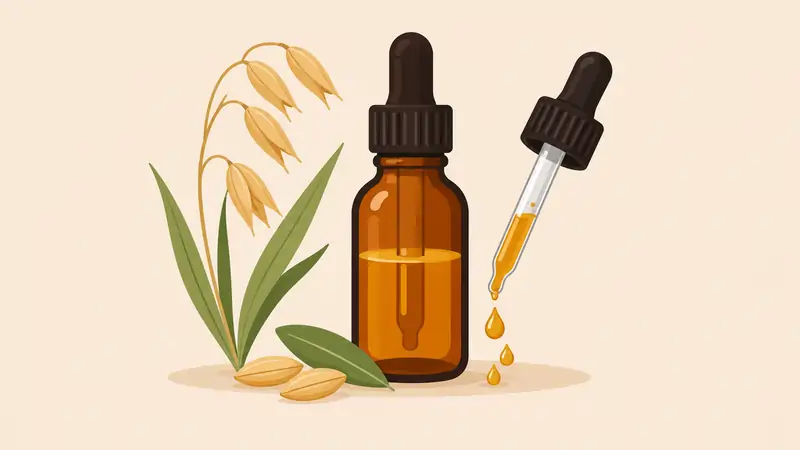
Oatstraw tincture drops vs dropper compares two ways people measure liquid herbal extracts. “Drops” means individual droplets released from the pipette. “Dropper” usually means the amount drawn into the pipette after one squeeze and release of the rubber bulb. A “dropperful” often means the same practical action, even if the glass tube is only partly filled.
This is where confusion starts. Many users expect one dropperful to mean a pipette filled to the top. In practice, a standard squeeze often fills the tube only partway. That partial fill can still be what the label intends by “1 dropper.”
The simplest answer
If your oatstraw tincture label says “1 dropper (30 drops),” follow the label as written. The brand is telling you that its intended serving is one dropper amount, roughly equal to 30 drops for that product and bottle setup.
Do not force the pipette to fill completely unless the label clearly says to use a full glass pipette. For many dropper bottles, that would give more liquid than the intended serving.
What Is One Drop?
One drop is a single droplet released from the dropper tip. It seems precise, but drop size can vary. The thickness of the liquid, the dropper opening, the angle of the bottle, temperature, and how fast you squeeze can all affect the size of a drop.
That means “30 drops” is useful as a label direction, but it is not the same as laboratory measurement. It is a practical household serving instruction.
Why drops are not always identical
Oatstraw tinctures can use different liquid bases, such as alcohol-water blends, glycerin-water blends, or other extract carriers. Thicker liquids may form larger or slower drops. Thinner liquids may release faster and smaller drops.
This is why two tinctures from different brands may not behave the same way, even if both say “30 drops.” Use the dropper that came with the bottle whenever possible.
What Is a Dropper?
A dropper is the full cap and pipette tool used to draw liquid from the bottle. In serving directions, “1 dropper” often means one squeeze and release of the bulb, then dispensing the liquid drawn into the pipette.
The confusing part is visual. The glass tube may not fill to the top after one squeeze. That does not always mean the dropper failed. It may be normal for that cap, bulb, and bottle design.
One squeeze is usually the practical reference
For many tinctures, a dropper serving is based on a normal squeeze, not a perfectly full pipette. Squeeze the rubber bulb, place the pipette tip into the liquid, release the bulb, and use what it draws up.
If the label says “1 dropper (30 drops),” the brand likely expects this normal draw to match the approximate drop count for that product.
What Is a Dropperful?
A dropperful usually means the amount of liquid the dropper pulls up after one full squeeze and release of the bulb. It does not always mean the glass tube is filled from bottom to top.
This is one of the most important points for beginners. A dropperful can look like half a pipette, a third of a pipette, or another partial fill. The actual amount depends on the bottle and dropper design.
Why “full dropper” can mislead people
The phrase “full dropper” sounds like the glass tube should be completely full. But in everyday supplement labeling, “full dropper” often means a full squeeze of the rubber bulb, not a full glass tube.
If you repeatedly squeeze, release, and try to fill the tube to the very top, you may take more than the label intended. That is why serving directions should be read carefully.
Why Does “1 Dropper (30 Drops)” Feel Confusing?
“1 dropper (30 drops)” can feel confusing because it combines a tool-based measurement with a count-based measurement. One person may count 30 drops. Another may use one drawn dropper. A third may try to fill the pipette completely.
The label is trying to make the serving easier, but the wording can create doubt if the dropper does not look full.
| Label wording | Plain-English meaning | Common mistake |
|---|---|---|
| 30 drops | Count 30 individual droplets | Assuming every drop is identical across brands |
| 1 dropper | Use the amount drawn by the dropper as directed | Trying to fill the glass tube to the top |
| 1 dropperful | Often one squeeze and release of the bulb | Thinking partial fill means wrong serving |
| 1 ml | A volume measurement | Using an unmarked dropper and guessing volume |
If the label provides both drops and dropper language, use them as cross-checks. They are not a reason to overfill the pipette.
How Should You Read Oatstraw Tincture Serving Directions?
Read oatstraw tincture serving directions in this order: serving size, frequency, mixing instructions, and warnings. Do not start by guessing based on the dropper shape.
A common direction may say something like “1 dropper (30 drops) 1 to 3 times daily with water.” This means the serving is one labeled dropper amount, approximately 30 drops, taken with water according to the listed frequency.
Serving size comes first
The serving size tells you how much the brand intends per use. The frequency tells you how often the product may be used according to the label. The liquid instruction tells you how to take it.
Do not turn “1 to 3 times daily” into “as much as I want.” It means the label gives a range, not an open-ended instruction.
Use the included dropper
Use the dropper that came with the oatstraw tincture bottle. Different droppers can pull different amounts. Switching caps between bottles can change the serving.
If the dropper breaks or gets lost, ask the seller what replacement size to use. Do not assume any random dropper is equivalent.
Does the Dropper Need to Fill to the Top?
No, the dropper usually does not need to fill to the top unless the label specifically says so. A normal dropper draw often fills only part of the glass pipette.
This can surprise people because the word “full” sounds visual. In tincture use, the intended idea is often functional: one full squeeze of the bulb, not a completely filled glass tube.
What a normal draw can look like
A normal draw may fill the pipette halfway or less. That can still be the expected amount for a dropperful. The rubber bulb can only pull a certain volume of liquid, and air remains inside the glass tube.
If your label says “30 drops,” you can count once to understand how your bottle behaves. After that, you can usually follow the simpler label method.
Why Do Droppers Vary Between Bottles?
Droppers vary because bottle size, pipette length, bulb size, liquid viscosity, and dropper tip design vary. Even the same herb can come in different extract bases and bottle formats.
Oatstraw tincture may be sold in alcohol-based or alcohol-free forms. A glycerin-based extract may be thicker than an alcohol-based tincture, so the drops may release differently.
Liquid thickness matters
Thin liquids usually move faster through a dropper. Thick liquids may move slowly and create larger drops. This can affect drop counting.
That is why label directions belong to the specific product, not every oatstraw tincture on the market.
Should You Count Drops or Use the Dropper?
If the label gives both, either method may help, but most users prefer the dropper method once they understand it. Counting 30 drops every time can be slow and messy.
Still, counting drops once can be useful when you first open the bottle. It helps you see what the brand means by one dropper amount.
| Method | Best for | Downside |
|---|---|---|
| Counting drops | Checking a new bottle or learning the serving | Slow and affected by drop size |
| Using one dropper | Daily routine after reading the label | Confusing if you expect a full glass tube |
| Using ml markings | Products with marked droppers | Not every dropper has clear marks |
| Guessing by eye | Not recommended | Easy to take too much or too little |
The best method is the one your label supports most clearly. If the label is unclear, ask the seller instead of inventing a serving system.
What If the Dropper Has Measurement Marks?
If the dropper has measurement marks, follow the label’s volume direction if one is provided. Some droppers show 0.25 ml, 0.5 ml, 0.75 ml, or 1 ml marks. Others have no marks at all.
Measurement marks can be useful, but only if the label uses volume. If your oatstraw tincture label says “30 drops” and does not mention milliliters, the marks are only a secondary clue.
Do not mix measurement systems casually
Do not assume 30 drops always equals 1 ml. That may be a common estimate for some liquids, but drop size can vary by formula and dropper.
For supplement use, the product label is more important than a generic online conversion.
What If Your Oatstraw Tincture Bottle Looks Different?
If your bottle or dropper looks different from a product photo, check whether the serving directions changed. Packaging can change between batches, sizes, or suppliers.
A larger bottle may use a longer pipette. A smaller bottle may use a shorter one. The visual fill level may look different even when the intended serving is similar.
When to ask the seller
Ask the seller if the dropper seems broken, the label is missing, the serving size is unclear, or the product page says something different from the bottle.
Secrets Of The Tribe uses a practical editorial standard for this topic: when serving language can be read in two ways, the brand should clarify the intended use rather than leaving customers to guess from the dropper shape.
Common Mistakes with Oatstraw Tincture Droppers
The first mistake is forcing the pipette to fill all the way to the top. That may give more than the labeled serving.
The second mistake is switching droppers between bottles. A cap from another tincture may not draw the same amount.
The third mistake is counting drops while holding the dropper at a strange angle. Angle and squeeze pressure can change drop size.
The fourth mistake is letting the dropper touch the mouth, hands, food, or counter. That can introduce residue into the bottle.
How to Take Oatstraw Tincture with Water
If the label says to take oatstraw tincture with water, add the serving to a small amount of water rather than a large glass you may not finish. Stir and drink the full amount.
This keeps the serving more predictable. If you add drops to a large bottle and sip it throughout the day, you may lose track of how much you actually took.
Keep the routine simple
Use the same cup, same method, and same time window when possible. A simple routine reduces measuring errors.
Do not use oatstraw tincture to treat, cure, prevent, diagnose, reverse, or manage any health condition. It is a dietary supplement, so follow the label and ask a qualified professional if you have health-related questions.
Checklist: How to Read Oatstraw Tincture Dropper Directions
Use this checklist when a label says “drops,” “dropper,” or “dropperful.” It helps you avoid overfilling the pipette, switching droppers, or guessing the serving size.
Read the serving size first
Find the exact serving direction before using the dropper. Look for drops, dropperful, milliliters, and frequency.
Use the original dropper
Use the dropper that came with the bottle. Another dropper may pull a different amount.
Do one normal squeeze
Squeeze the rubber bulb, place the pipette in the liquid, and release. Do not force the glass tube to fill to the top unless the label says so.
Count once if needed
If the label says “1 dropper (30 drops),” count the drops once to understand your bottle. After that, use the label method consistently.
Check for ml markings
If the dropper has volume marks and the label gives ml, use the marks. If the label only gives drops, do not rely on generic conversions.
Take it with water if directed
Add the serving to a small amount of water and drink it fully. Avoid spreading the serving across a large drink you may not finish.
Keep the dropper clean
Do not touch the dropper to your mouth, hands, food, or counter. Clean handling protects the bottle after opening.
Ask if the label is unclear
Contact the seller if the bottle, product page, and serving directions do not match. Do not guess with liquid supplements.
FAQ
What does oatstraw tincture drops vs dropper mean?
It compares counting individual drops with using the amount drawn into the dropper as the serving.
Does one dropper mean the glass pipette is full?
Not usually. One dropper often means one normal squeeze and release, even if the glass tube fills only partway.
Is 30 drops the same as one dropper?
It can be if the label says “1 dropper (30 drops).” The equivalence belongs to that specific product and dropper.
Should I count 30 drops every time?
You can count once to understand the bottle, but daily counting may be unnecessary if the label supports one dropper serving.
Why does my dropper only fill halfway?
That is common. The bulb may only pull part of the glass tube full, and that can still be a normal dropperful.
Can I use a different dropper?
It is better to use the original dropper. Different droppers can draw different amounts.
Does drop size vary?
Yes. Drop size can vary by liquid thickness, dropper tip, angle, and squeeze pressure.
Can I take oatstraw tincture directly?
Follow the product label. If it says to take with water, mix the serving with water.
What should I do if the serving directions are unclear?
Ask the seller or manufacturer for clarification before using the product regularly.
Glossary
Oatstraw
The aerial parts of Avena sativa used in herbal products and dietary supplements.
Tincture
A liquid herbal extract commonly made with alcohol and water as the extraction base.
Drop
One small droplet released from the tip of a dropper.
Dropper
The cap and glass pipette tool used to draw and dispense liquid from a bottle.
Dropperful
The amount drawn into the pipette after one squeeze and release of the rubber bulb. It may not fill the glass tube completely.
Serving size
The amount listed on the label for one use of the product.
Serving directions
The label instructions explaining how much to take, how often, and how to mix or use the product.
Liquid extract
A plant extract in liquid form. It may use alcohol, glycerin, water, or another carrier.
Milliliter
A metric unit of liquid volume. Some droppers show milliliter markings, but not all labels use them.
Conclusion
Oatstraw tincture drops vs dropper is confusing because “1 dropper” often means one normal squeeze, not a glass pipette filled to the top. Follow the label, use the original dropper, and ask the seller if the serving direction is not clear.
Sources Used
General dietary supplement labeling guidance, Dietary Supplement Labeling Guide – FDA
Consumer guidance on supplement use and label reading, Dietary Supplements: What You Need to Know – NIH Office of Dietary Supplements
General herbal preparation and tincture terminology, Herbal Medicine: Expanded Commission E Monographs – American Botanical Council
Botanical name and plant reference for oat, Avena sativa plant profile – Plants of the World Online
General supplement quality and serving-label context, USP Dietary Supplement Verification Program – United States Pharmacopeia