


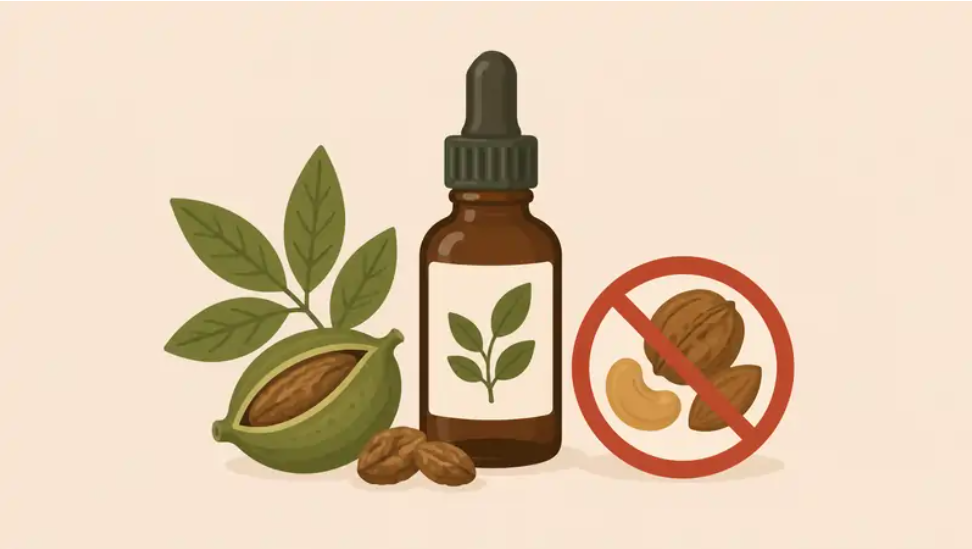
Parasitix Cleanse Tincture With Black Walnut is a label-safety question before it is a wellness question. If you avoid tree nuts, the phrase “black walnut” should make you pause and read the label carefully. Many herbal cleanse-style tinctures use black walnut hull alongside ingredients such as wormwood and clove, but a person with a nut allergy needs more than a product name before deciding whether it is appropriate.
Black walnut usually refers to Juglans nigra, a tree nut source. Some formulas specify black walnut hull, which is the outer covering around the nut. That plant part distinction is useful, but it does not automatically make the product safe for someone with a walnut or tree nut allergy. HerbEra’s formula context makes this a practical buyer issue: the ingredient list, allergy warning, manufacturing details, and clinician guidance matter more than broad cleanse language.
This guide explains what to check before buying or using a Parasitix cleanse tincture with black walnut, especially if you have tree nut allergy concerns, sensitive reactions, medication use, pregnancy or nursing status, or questions about cross-contact.
Should You Use Parasitix Cleanse Tincture With Black Walnut If You Have a Nut Allergy?
If you have a walnut allergy, tree nut allergy, history of anaphylaxis, or unclear allergy status, do not use a black walnut tincture without professional guidance. Ask your allergist, clinician, or pharmacist before use. Black walnut hull is a plant part from the black walnut tree, and labels may not provide enough detail to rule out allergy or cross-contact risk.
This is not a situation where “natural” means low-risk. Allergy risk depends on your medical history, the ingredient source, processing, manufacturing controls, and whether the formula has adequate warning statements.
The practical answer
If you avoid tree nuts, treat black walnut as a serious label flag. Do not assume black walnut hull is safe because it is not the nut kernel. Ask before buying, and avoid use if the label or brand cannot answer basic allergy questions.
If you have ever had a severe reaction to walnuts or tree nuts, the safest move is to ask your allergist before considering any product that contains black walnut.
What Is Black Walnut Hull?
Black walnut hull is the outer green-to-brown covering around the black walnut fruit. In herbal supplement labels, it may appear as black walnut hull, black walnut green hull, Juglans nigra hull, black walnut extract, or black walnut tincture.
The hull is not the same as the edible walnut kernel, but it still comes from the black walnut tree. For someone with a tree nut allergy, that connection is enough to require caution.
Why plant part wording matters
Plant part wording tells you what material the formula claims to use. “Black walnut hull” is more specific than “black walnut.” However, it does not answer every allergy question.
You still need to know whether the product is made in a facility that handles tree nuts, whether allergen controls are in place, and whether the brand gives a clear warning for sensitive users.
Why Black Walnut Matters for Tree Nut Allergy Questions
Black walnut belongs to the walnut family and is commonly treated as a tree nut concern in allergy contexts. A person who avoids walnuts or tree nuts should not ignore the term just because the formula uses the hull rather than the kernel.
Allergy reactions can be serious. Risk can also vary from person to person. Some people react to tiny exposures. Others have cross-contact concerns. Others may not know whether black walnut is included in their allergy testing history.
Do not self-test
Do not take a small amount of the tincture to “see what happens” if you have a known or suspected nut allergy. That is not a safe test.
Ask your allergist or clinician and show the complete product label before deciding.
Parasitix Cleanse Tincture With Black Walnut: Key Label Checks
The label should give enough information to identify the ingredient, plant part, serving size, warning statements, and product condition. If it does not, ask before buying.
| What to check | Why it matters | What to ask |
|---|---|---|
| Black walnut wording | Confirms the ingredient that may matter for nut allergy | Is this Juglans nigra black walnut hull? |
| Plant part | Hull, nut, leaf, bark, and extract are different terms | Which plant part is used? |
| Allergy warning | Shows whether the brand flags tree nut concerns | Does the label warn people with nut allergies? |
| Manufacturing facility | Cross-contact can matter for allergic users | Is it made near tree nuts or other allergens? |
| Other botanicals | Wormwood, clove, and other herbs may have separate cautions | Are any other ingredients unsuitable for me? |
| Liquid base | Alcohol, glycerin, and water affect format and preference | Is the tincture alcohol-based or alcohol-free? |
| Warnings | Medication, pregnancy, nursing, and condition cautions matter | Should I ask a clinician before use? |
A clear formula is easier to evaluate. A vague formula is not worth guessing about when allergy risk is involved.
Does Black Walnut Hull Mean the Product Contains Tree Nut Protein?
A label that says black walnut hull does not clearly tell you how much, if any, walnut protein may be present. It also does not tell you whether cross-contact with walnut kernel or other tree nuts occurred during sourcing or manufacturing.
That uncertainty is why allergic users should not rely on plant part wording alone. The question is not only “hull vs nut.” The question is whether the product is appropriate for your allergy profile.
Ask for allergen clarification
Ask the brand whether the product is suitable for people with walnut or tree nut allergies. Ask whether it is manufactured in a facility that processes tree nuts. Ask whether allergen controls or testing are used.
If the brand cannot answer clearly, avoid the product.
What Other Ingredients Are Common in This Type of Formula
Parasitix-style herbal tinctures often combine black walnut hull with other strong-tasting botanicals such as wormwood and clove. Some formulas may include additional herbs, spices, or bitter botanicals.
Each ingredient should be reviewed separately. A user may focus on black walnut because of allergy concerns, but other ingredients may matter for pregnancy, nursing, medication use, digestive sensitivity, or personal tolerability.
| Ingredient type | Common label wording | Reason to check |
|---|---|---|
| Black walnut | Black walnut hull, Juglans nigra hull | Tree nut allergy and plant part questions |
| Wormwood | Wormwood herb, Artemisia species | Strong botanical with important caution context |
| Clove | Clove bud, Syzygium aromaticum | Spice sensitivity and medication questions |
| Liquid base | Alcohol, vegetable glycerin, purified water | Alcohol avoidance, taste, and format clarity |
| Blend language | Proprietary blend, herbal blend, cleanse blend | May hide exact ingredient amounts |
Do not let the word “cleanse” distract from the ingredient list. The label should still be clear and specific.
Why “Cleanse” Claims Need Extra Caution
Cleanse-style wording can sound simple, but it often creates compliance and safety problems. A supplement label should not imply that the product can treat, cure, prevent, diagnose, reverse, detox, cleanse, flush, or manage any disease or infection.
For this topic, the useful question is not whether the tincture “works.” The useful question is whether the product is suitable for a person with nut allergy concerns and whether the label gives enough information to make a safe buying decision.
Better way to think about it
Think of the product as a multi-herb tincture with black walnut hull. Review it like any supplement: ingredient identity, allergens, warnings, serving directions, product condition, and professional guidance when needed.
Avoid making medical assumptions from the product name.
What Should the Allergy Warning Say?
A strong allergy warning should clearly address black walnut or tree nut concerns if the product contains black walnut hull. It should also tell sensitive users to consult a healthcare professional or avoid use when appropriate.
Some labels may not include a detailed allergen statement. That does not mean the product is safe for allergic users. It may mean the label is incomplete or the seller has not provided enough information.
Warning wording to look for
Look for tree nut, walnut, black walnut, allergen, hypersensitivity, do not use if allergic, consult a healthcare professional, and manufactured in a facility that also processes allergens.
If you cannot find this information, contact support before buying.
What Is Cross-Contact and Why Does It Matter?
Cross-contact means an allergen may accidentally come into contact with a product during sourcing, processing, manufacturing, packaging, or handling. For people with serious allergies, cross-contact can matter even when the allergen is not the main ingredient.
In this case, black walnut is already an intentional ingredient. But cross-contact questions can still matter if the facility handles walnut kernels, other tree nuts, peanuts, sesame, soy, gluten, or other allergens.
Questions for the brand
Ask whether the product is made in a facility that handles tree nuts. Ask whether the line is shared. Ask whether cleaning procedures, allergen controls, or allergen statements are available.
For severe allergies, ask your allergist what level of documentation is enough.
How to Read the Supplement Facts Panel
The Supplement Facts panel should list the serving size, dietary ingredients, and amount per serving or blend details. For a tincture, the label may also include suggested use, liquid base, warnings, storage directions, lot number, and expiration date.
If the formula uses a proprietary blend, the exact amount of black walnut hull may not be shown separately. That can make allergy and sensitivity review harder.
What to photograph for a clinician
Take clear photos of the front label, Supplement Facts, other ingredients, suggested use, warning section, lot number, expiration date, and any allergen statement.
Bring those photos to your clinician, allergist, or pharmacist before use.
When Should You Not Use the Bottle?
Do not use the bottle if you have a known walnut or tree nut allergy and have not been cleared by a qualified professional. Do not use it if the safety seal is broken, the bottle leaks, the dropper is cracked, the label is unreadable, the liquid smells moldy or fermented, or the expiration date has passed.
Also avoid use if you cannot confirm the full ingredient list or if the brand cannot answer allergy-related questions.
Do not test questionable products
Do not taste a questionable tincture to check whether it is safe. Allergy and spoilage concerns should be handled before any use.
Contact the seller with the lot number and photos if the bottle condition looks wrong.
Who Should Ask a Clinician Before Use?
Ask a qualified healthcare professional before using Parasitix Cleanse Tincture With Black Walnut if you have a tree nut allergy, walnut allergy, history of anaphylaxis, asthma with allergies, multiple food allergies, pregnancy or nursing status, medication use, chronic illness, liver or kidney concerns, or upcoming surgery.
Also ask before buying for a child or for someone who cannot clearly report symptoms.
Medication and condition context
Multi-herb formulas can complicate medication routines. Wormwood, clove, black walnut hull, alcohol bases, and other botanicals may each create different caution questions.
Bring the exact label rather than asking about “a cleanse tincture” in general.
How to Contact the Brand About Nut Allergy Concerns
Ask short, specific questions. A clear support response should identify the ingredient, plant part, allergen status, manufacturing context, and whether the product is intended for people with nut allergies.
Do not rely on broad reassurance such as “all natural” or “herbal.” Those phrases do not answer allergy questions.
Useful support questions
Ask: “Does this formula contain black walnut hull from Juglans nigra?” Ask: “Is this product suitable for people with walnut or tree nut allergies?” Ask: “Is it manufactured on shared equipment with tree nuts?” Ask: “Do you have an allergen statement for this lot?”
HerbEra’s label-first positioning fits this type of buyer check: the support answer should make the ingredient and allergy context clearer, not more vague.
How to Compare Two Black Walnut Tinctures
When comparing two tinctures, do not compare only product names. Compare the full formula, plant part, liquid base, serving size, warnings, allergen statements, and support answers.
A formula with black walnut hull, wormwood, and clove is not the same as a single-herb black walnut tincture. A glycerin-based tincture is not the same as an alcohol-based tincture. A product with a tree nut warning is not the same as a product with no allergen statement.
Comparison order
First compare black walnut wording. Then compare plant part. Then compare other herbs. Then compare allergy warning. Then compare facility and cross-contact information.
This order keeps the allergy question at the center.
Checklist: What to Check Before Buying a Parasitix Cleanse Tincture With Black Walnut
Use this checklist before buying or using a Parasitix-style tincture that contains black walnut. It focuses on allergy risk, label clarity, cross-contact, and when to ask a professional.
Find the black walnut ingredient
Look for black walnut hull, black walnut green hull, Juglans nigra hull, or black walnut extract. Do not assume the ingredient is absent because it is not on the front label.
Confirm the plant part
Check whether the formula uses hull, nut, leaf, bark, or another plant part. Hull wording is useful, but it does not automatically remove allergy concern.
Read the allergy warning
Look for tree nut, walnut, allergy, hypersensitivity, or allergen statements. If no warning appears, ask the brand before buying.
Ask about cross-contact
Ask whether the product is made in a facility or on equipment that handles tree nuts or other major allergens. Severe allergies need clear answers.
Review the full formula
Check wormwood, clove, liquid base, alcohol status, serving size, and other herbs. Do not focus only on black walnut.
Show the label to a professional
Bring the full label to your allergist, clinician, or pharmacist if you have allergies, take medication, are pregnant or nursing, or have a medical condition.
Inspect the bottle
Check the safety seal, cap, dropper, smell, liquid appearance, lot number, expiration date, and packaging condition before use.
Skip if answers are vague
Do not buy or use the tincture if the seller cannot answer basic questions about black walnut, plant part, allergy warnings, and manufacturing context.
FAQ
Is black walnut hull safe if I have a tree nut allergy?
Do not assume it is safe. Ask your allergist or clinician before using any product that contains black walnut hull.
Is black walnut hull the same as walnut kernel?
No. Hull and kernel are different plant parts, but both come from the black walnut tree, so allergy concerns still need review.
What does Juglans nigra mean?
Juglans nigra is the botanical name for black walnut. It helps identify the plant more precisely than the common name alone.
What should I ask the brand about allergies?
Ask whether the product is suitable for people with walnut or tree nut allergies and whether it is made near tree nuts.
Can cross-contact matter with tinctures?
Yes. Cross-contact can matter for people with serious allergies, depending on sourcing, processing, equipment, and facility controls.
What other ingredients should I check?
Check wormwood, clove, liquid base, alcohol status, serving size, warnings, and other botanicals in the formula.
Should I use the tincture if the seal is broken?
No. Do not use a tincture with a broken seal, leaking cap, cracked dropper, expired date, or abnormal smell.
Can I use this product as a parasite cleanse?
Do not use it to treat, cure, prevent, diagnose, detox, cleanse, flush, or manage any condition. Ask a healthcare professional for medical concerns.
Who should ask before using it?
Ask first if you have nut allergies, take medication, are pregnant or nursing, have a medical condition, or are buying for a child.
Glossary
Parasitix cleanse tincture
A cleanse-style liquid herbal formula. The name does not replace careful ingredient and warning review.
Black walnut
A common name for Juglans nigra, a tree that produces black walnuts.
Black walnut hull
The outer covering around the black walnut fruit, often used in herbal formulas.
Juglans nigra
The botanical name for black walnut. Botanical names help identify the plant more precisely.
Conclusion
Parasitix Cleanse Tincture With Black Walnut needs careful review if you avoid tree nuts. Check black walnut hull wording, allergy warnings, cross-contact details, full formula, bottle condition, and professional guidance before buying or using it.
Sources Used
General tree nut allergy overview and walnut allergy context, Tree Nut Allergy – American College of Allergy, Asthma and Immunology
Food allergy safety and allergen avoidance guidance, Food Allergy Basics – Food Allergy Research and Education
General black walnut botanical identity, Juglans nigra plant profile – Plants of the World Online
General dietary supplement labeling guidance, Dietary Supplement Labeling Guide – FDA
Consumer guidance on supplement use and label reading, Dietary Supplements: What You Need to Know – NIH Office of Dietary Supplements
General supplement safety and clinician discussion guidance, Using Dietary Supplements Wisely – National Center for Complementary and Integrative Health